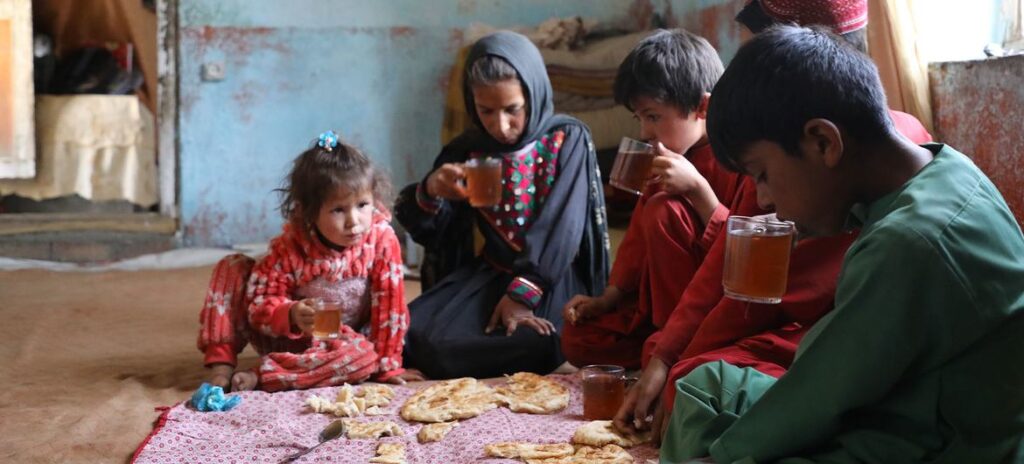
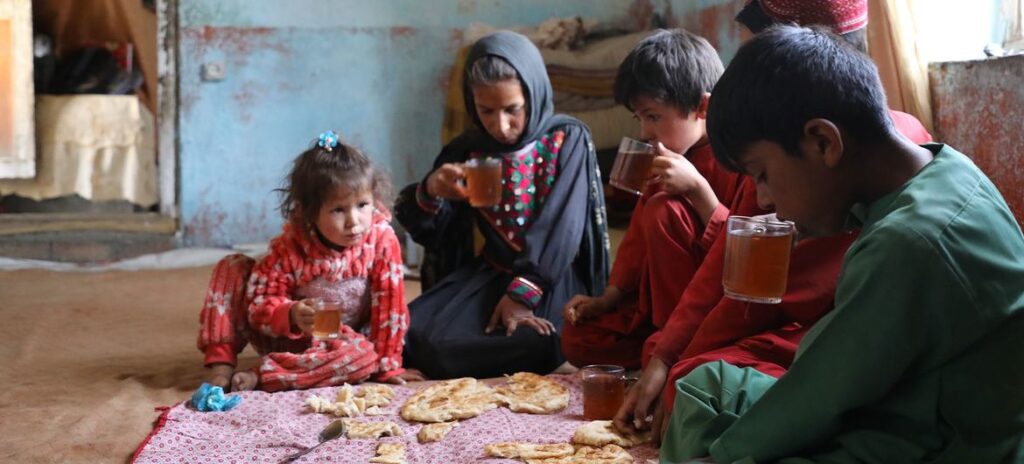
Despite narratives of economic “stability” and an estimated 4.3 percent growth rate in 2025, Afghanistan’s hunger crisis continues to worsen. The latest IPC analysis projects 17.4 million people (36 percent of the population) in IPC Phase 3 or above during the winter lean season, including 4.7 million people classified in Emergency (Phase 4). This represents a clear deterioration from last winter, with 2.6 million more people projected to face crisis or worse compared to the 14.8 million estimated in the previous year.
Food insecurity in Afghanistan remains multifactorial, driven by climate‑induced production shocks, large‑scale return movements, and declining international assistance. However, structural market vulnerabilities increasingly dominate, shaping how these shocks translate into higher food prices, declining purchasing power, and worsening food affordability. A market‑based lens helps explain why food insecurity continues to deepen even in a context of relatively low headline inflation.
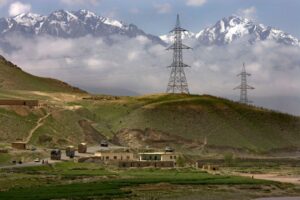
Afghanistan’s high reliance on subsistence agriculture makes it especially vulnerable to climate shocks. The year 2026 marks the sixth consecutive year of below-average rainfall, placing severe constraints on staple food production. Prolonged drought conditions and the depletion of groundwater resources have resulted in crop failures of nearly 80 percent in rain‑fed wheat across several northern and western provinces. These impacts have been further compounded by a nationwide decline in irrigated crop production. As a result, many households have lost their own‑produced food stocks and must increasingly rely on markets for basic consumption. At the same time, more than 2.6 million returnees have arrived in the country, adding further pressure on food demand and already strained markets. The combined effect of reduced domestic supply and rising demand has intensified market tightness.
In this context, wheat market dynamics are particularly critical. Wheat is Afghanistan’s primary source of calories, and disruptions to domestic production have translated quickly into price increases. According to the WFP weekly market report, during the fourth week of December 2025, prices of wheat grain and wheat flour were 18 percent and 11 percent higher, respectively, than in the same period of the previous year.
With domestic supply constrained and no sizable public grain reserves, demand has shifted toward imports. Wheat imports from Kazakhstan increased by nearly 37 percent between September and December 2025, underscoring growing import dependence. These pressures were further compounded by border tensions with Pakistan, which disrupted one of Afghanistan’s most important trade corridors. Pakistan is both a major supplier and transit hub for essential food commodities, including rice and edible oil. Border closures and delays reduced import flows, raised transport and transaction costs, and constrained market supply at a time when domestic production was already weak. As a result essential commodities like cooking oil prices rose by around 10 percent, amplifying overall food inflation and price volatility.
Cross‑border disruptions also limited households’ ability to substitute away from wheat as wheat prices increased. Rice, a key alternative staple, became more expensive and prices increased by 37 percent. This narrowed consumption options and reinforced inflationary pressure across multiple staples.
The market impacts are most severe for urban, market‑dependent households. Rising food prices have forced households to allocate a growing share of their income to food. At the same time, income opportunities remain weak. WFP reports the number of days of work available for unskilled workers per week contracted by 30 percent. Persistent unemployment combined with stagnant wages have further eroded purchasing power. As a result, food insecurity is emerging even among households not directly affected by agricultural production losses.
What Can Be Done?
Reversing Afghanistan’s deteriorating hunger outlook requires reducing vulnerability within food markets, not only addressing immediate shortages. In the short term, stabilizing staple food markets is critical. This includes keeping trade corridors open and predictable, particularly with Pakistan and Central Asia. Expanding regional import arrangements, improving trade logistics, and minimizing transaction costs would help dampen rapid price transmission during supply shocks.
At the same time, building strategic grain reserves and exploring temporary price‑smoothing mechanisms, such as targeted market releases during the lean season, could reduce extreme volatility in wheat and other staple prices. Over the medium term, investments in drought‑resilient agriculture, irrigation for rainfed areas, and productivity improvements in wheat production are essential to reduce structural import dependence.
Equally important are measures that strengthen household purchasing power, especially in urban areas where food insecurity is increasingly driven by prices rather than availability. Policies that support labor demand, public works, and income‑generating activities, alongside market‑based social protection that adjusts to food inflation, can help prevent price shocks from translating directly into hunger. Without interventions that address both supply volatility and income constraints, Afghanistan’s food insecurity will remain highly sensitive to climate shocks and regional market disruptions.