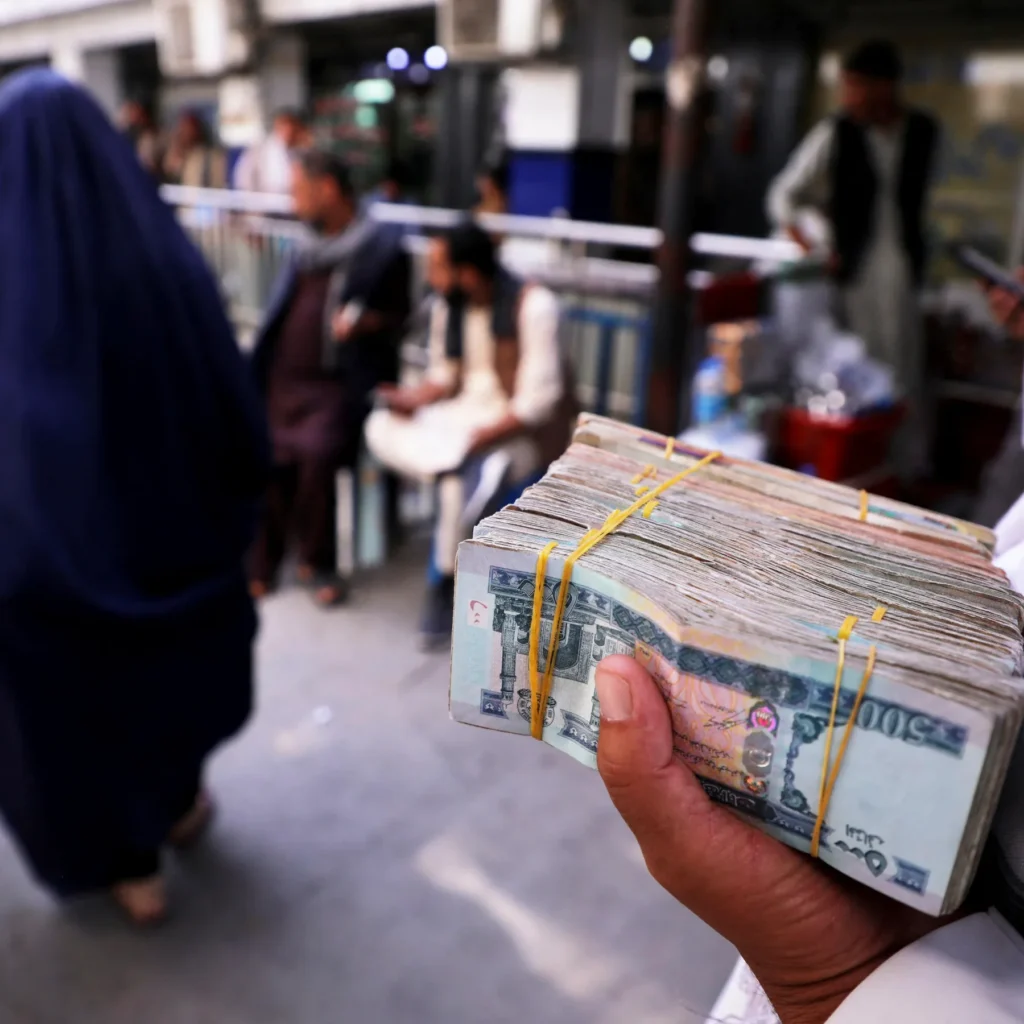
Afghanistan’s economy remains highly unstable and heavily reliant on foreign aid. Its macroeconomic policies are largely shaped by the actions of international donors, leaving the Afghan government with limited autonomy. As a result, key macroeconomic indicators like economic growth, inflation, per capita income, and investment volume are significantly influenced by the specific plans and priorities of foreign aid agencies. The ongoing political and security instability in Afghanistan has had a profound, indirect impact on its economic indicators. Since the withdrawal of foreign forces and the collapse of the former government in 2021, the Afghan economy has experienced a severe downturn. This instability has led to the dismantling of the banking system, a deep recession, and a dramatic devaluation of the Afghan currency against foreign currencies. The resulting High inflation has further exacerbated the economic crisis.
The economic crisis in Afghanistan has deepened significantly following the withdrawal of foreign forces. According to United Nations field studies and the World Bank, unemployment rates have soared over the past 3 years, and poverty now affects half of the population. Despite international efforts Aimed to mitigate the humanitarian crisis, the Afghan economy remains fragile.
To prevent a further collapse of the currency, the international community and the U.S. government have injected billions of dollars into the Afghan currency market. This intervention helped stabilize the exchange rate, preventing a more severe devaluation. Additionally, the release of a portion of Afghanistan’s frozen foreign assets, valued at over three billion dollars, contributed to a 22.5% decrease in the value of the Afghan currency. Given that imports account for over 62% of Afghanistan’s trade volume, the devaluation of the Afghan currency has had a significant impact on domestic prices. The decline in the value of the dollar has led to an unprecedented drop in the cost of imported goods. This, in turn, has contributed to a notable decrease in the inflation rate, with August 2024 seeing a decline of approximately 6.6%, and the monthly inflation rate reaching -7.49%.
Figure1: Deflation in Afghanistan
https://www.datawrapper.de/_/e1TBd
Over the past two years, the Taliban-controlled central bank has implemented a combination of contractionary monetary policy to stabilize the Afghan currency. These measures, aimed at reducing the money supply and increasing government revenue, have contributed to a decline in inflation. However, the Taliban regime often presents this deflation as an economic achievement, overlooking the broader economic challenges facing the country. Despite official statistics showing an increase in Afghanistan’s trade volume since 2021, unofficial reports indicate a significant decline compared to pre-2021 levels. This is while the country continues to face economic stagnation and widespread poverty. Since imports have a direct relationship with national income, and as national income has declined, the actual volume of imports, which was estimated to be more than 11 billion based on unofficial reports, has also decreased. This means that the people of Afghanistan have lost their purchasing power, leading to a decrease in the import of goods. Given the current economic situation in Afghanistan, it is essential to evaluate whether the negative inflation rate should be considered a positive indicator. This article will explore the potential impacts of deflation in the country’s crisis-ridden economy.
What is negative inflation?
Negative inflation, or deflation, occurs when the general price level of goods and services declines over time. given the same income, purchasing power increases, allowing people to buy more with their money. Deflation is different from disinflation, which refers to a decrease in the inflation rate but remains above zero.
How does negative inflation occur?
Inflation can be driven by either supply-side or demand-side factors. Supply-side inflation arises from increased production costs and import costs. In an import-dependent economy like Afghanistan, a stronger U.S. dollar can lead to higher import prices and, consequently, inflation.
Demand-side inflation occurs when the demand for goods and services outpaces supply. This can cause prices to rise due to scarcity. However, the current situation in Afghanistan is a reversal of this trend. The decline in the value of the U.S. dollar has reduced import prices, while a decrease in consumer spending due to insufficient income has dampened demand. This combined effect has resulted in negative inflation, further intensified by the continued influx of U.S. dollars into the Afghan currency market.
Economic Impacts of Negative Inflation
Negative inflation in Afghanistan’s economy is primarily a result of contractionary monetary policies implemented by the Taliban government. Despite receiving increased foreign aid and remittances, the central bank has maintained a strict policy of reducing the money supply. This has led to a decline in liquidity and a decrease in the velocity of money circulation.
The combination of a stronger Afghani and a shrinking money supply has created a deflationary environment. This situation transfers wealth from borrowers to lenders, as the value of fixed capital investments declines relative to outstanding debts. As a result, investors may become more risk-averse and choose to hold cash instead of investing in productive projects. This can lead to a negative inflation spiral, where falling prices cause a decrease in production, wages, and demand, further exacerbating the deflationary cycle.
The Great Depression of 1930 is often cited as an example of a negative inflation spiral. This economic phenomenon highlights the potential risks of deflation and the importance of avoiding a vicious cycle of declining prices and economic activities.
The continued stagnation in production poses significant risks to Afghanistan’s economy. Manufacturing companies, enterprises, and businesses may face closure or bankruptcy, leading to a surge in unemployment. However, negative inflation can be less harmful when accompanied by technological advancements which are absent in Afghanistan economy. New technologies can reduce production costs and improve service delivery, mitigating some of the negative effects of deflation.
Afghanistan’s dollar-based economy is heavily influenced by the value of the U.S. dollar. Changes in the exchange rate directly impact various sectors of the economy, including the price level of goods and services. A sustained decline in the dollar rate can lead to a decrease in the prices of imported goods, potentially causing losses for importers and sellers. This may discourage commercial activity and erode their capital over time.
While negative inflation may initially seem attractive to consumers due to lower prices, the long-term consequences can be detrimental. The decline in prices can lead to a decrease in production, sales, and service provision. This, in turn, can contribute to a rise in unemployment and a decline in wages, reducing household incomes and overall well-being.
In an economy experiencing both deflation and recession, the withdrawal of liquidity from the economic cycle can further exacerbate the situation. The banking system may face challenges due to a lack of financial resources, and the overall economic welfare of society can suffer. Therefore, the negative effects of deflation can be as severe as those of high inflation, both of which can disrupt production, commercial activities, and consumer welfare.
Strategies to Deal with Negative Inflation:
To combat negative inflation, governments and central banks typically employ various strategies:
- Interest Rate Adjustments: Central banks can raise interest rates to discourage borrowing and increase spending, thereby curbing inflation. However, in Afghanistan’s uncertain economy and constrained banking system, this approach may be limited in its effectiveness.
- Demand Management: Governments can stimulate demand through fiscal policies like increased government spending or tax cuts. This can be particularly useful in economies with low demand and limited purchasing power, such as Afghanistan.
- Exchange Rate Control: Stabilizing the exchange rate, especially in a dollarized economy like Afghanistan, can help mitigate inflation by reducing the cost of imports and controlling domestic prices.
- Budgetary Reforms: Negative inflation, or deflation, can be exacerbated by a combination of factors, including a lack of liquidity, a government budget deficit, and the methods used to finance this deficit. To combat deflation, a fundamental step involves reforming the structure of the government budget.