Introduction
After the Taliban returned to power in 2021, the suspension of foreign aid caused a severe economic shock in Afghanistan, a country highly dependent on international assistance. The economy contracted sharply, pushing the Taliban regime to seek alternative sources of revenue. In this context, mineral resources have gained renewed importance as a potential pillar of economic recovery.
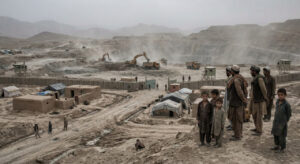
Despite contributing only a small share to GDP, which is only 2.3 percent of total GDP, the mining sector is viewed by the Taliban as one of the most viable sources of income amid sanctions and the loss of donor funding. For example, in September 2023, the Taliban announced that they had signed more than $6.5 billion in new mining deals. Efforts to expand mining have intensified, accompanied by limited oversight, growing foreign involvement—particularly from China—and rising local opposition.
While Afghanistan’s mineral wealth is estimated to be around one trillion US dollars, weak governance and exclusion of local communities have increased tensions. Historically, competition over mining revenues has also fuelled conflict among local elites, suggesting that while mining may support short-term revenue generation, it carries significant political and social risks.
Mining Revenues as a Pathway to Political Stability
In Afghanistan, mineral resources do not function solely as a source of economic revenue; they also play a significant role in power relations and political stability. Control over mineral resources—particularly lucrative deposits such as gold—is likely to become an instrument for securing the loyalty of local elites and consolidating the Taliban’s political order.
From this perspective, mining regions can simultaneously serve as centres of relative stability and as potential sources of instability. When benefits are distributed in a controlled and exclusive manner, these areas may experience short-term stability; however, when local actors compete for access to mineral rents, mining can become a driver of violent conflict and insurgency, as was observed in Badakhshan during the republican period.
According to Afghanistan Analyst Network’s report, as the Taliban regime expands mineral extraction, particularly in peripheral regions, it risks provoking increased resistance from economically vulnerable communities that depend on these resources for survival. Local concerns are heightened by the perception that the new authorities are more distant and less negotiable than previous local powerbrokers. These dynamics are especially evident in historically marginalised regions such as Badakhshan and Takhar.
In addition, competing patronage networks within the Taliban regime may exacerbate internal tensions. While mineral wealth is often framed as a solution to Afghanistan’s economic crisis, poorly managed extraction risks turning a potential opportunity into a source of long-term instability.
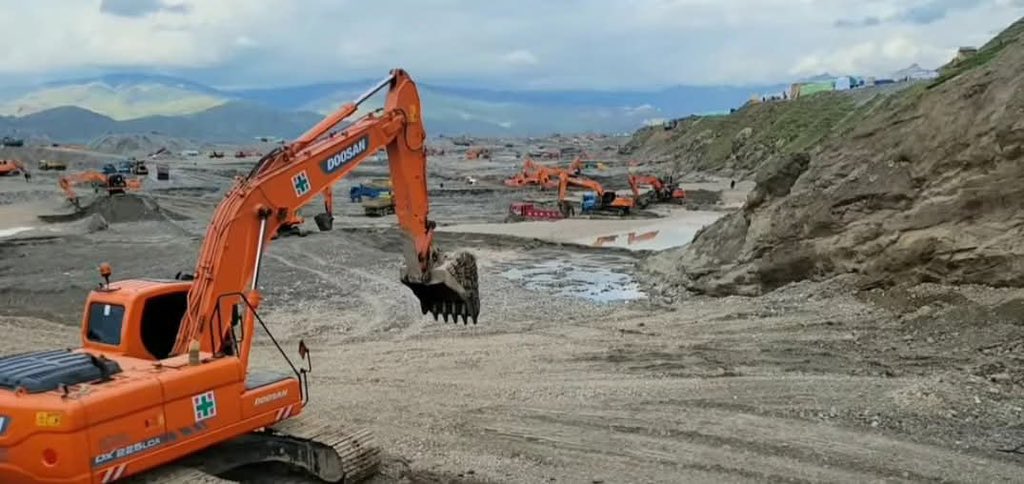
Given existing estimates that place Afghanistan’s gold reserves at approximately 300–500 metric tons, with a potential value of USD 20–50 billion, it is not surprising that the Taliban view these resources as a foundation for political consolidation and financial sustainability. Gold extraction—particularly in provinces such as Takhar—represents a fast, controllable, and largely unaccountable source of revenue, helping to explain the significant increase in mining activities since 2021. In addition, mineral resources hold geo-economic importance, especially for countries such as China, which are among the key actors in Afghanistan’s mining contracts. Through these agreements, the Taliban also seek to cultivate new investment partners and political allies.
Challenges
Despite these dynamics, the mining sector’s actual contribution to Afghanistan’s long-term economic development remains limited. Despite high public expectations, the sector accounts for less than 3 percent of GDP. Industrial mining is capital-intensive and characterised by weak domestic supply chains, limited processing capacity, heavy reliance on imported extraction equipment, and the export of minerals with little value added. As a result, the sector generates only limited economic multiplier effects.
Moreover, mining impose significant social and environmental costs, while anticipated development benefits—particularly at the level of host provinces—have rarely materialised. The growing gap between local expectations and tangible outcomes, combined with weak state–community engagement, is likely to fuel social discontent and reinforce perceptions that the benefits of resource extraction accrue primarily to the central authorities or foreign actors rather than to local populations. According to financial times, there are also concerns that a sustained revenue stream from mining may not only finance Taliban projects but could embolden the regime and reduce incentives to moderate its most restrictive policies.