February 20 is International Social Justice Day, and the 2026 United Nations slogan is “Renewing Commitment to Social Development and Social Justice,” emphasizing equal access to economic and social opportunities. From the perspective of the political economy of development, social justice is a prerequisite for sustainable and inclusive economic growth. Fair distribution of opportunities and resources activates human capital, increases productivity, and breaks the cycle of poverty. Social injustice occurs when the political power structure and the allocation of economic resources prevent a significant portion of society from accessing opportunities—a problem clearly seen in Afghanistan during two key historical periods: the post-2001 republic and the Taliban regime since 2021.
The Republic Era (2001–2021): Sufficient Resources, Structural Inequality
The post-2001 republic era saw massive foreign aid and reconstruction projects. Billions of dollars of international resources entered the country, yet fair economic distribution was not achieved. Why?
According to the Limited Access Orders theory (North, Wallis & Weingast, 2009), countries with limited access orders are caught in a continuous cycle of controlling power and resources. In these countries, elites form ruling coalitions to control violence and competition, keeping economic and political resources limited among themselves. This limitation reduces the general population’s access to economic opportunities, public services, and political participation, thereby reinforcing social injustice. Afghanistan, with its long history of concentrated power and restricted political networks, is a classic example of this system.
When political and economic institutions focus on protecting the interests of select groups, resources are not accessible to the general public. In Afghanistan, a large portion of the budget and projects was concentrated in central areas and regions close to power networks, while remote areas, rural communities, and marginalized groups received limited public services. This pattern reflects what the political economy of development describes: the concentration of political power leads to a rent-based allocation of economic resources. One significant effect of this structural injustice is the underdevelopment of human capital. During the Republic, although women made up a larger percentage of the workforce, their participation remained limited.
The Taliban Regime (2021–Present): Intensified Inequality and Economic Crisis
In the summer of 2021, political authority in Afghanistan shifted as the Taliban took power. This change not only transformed the country’s political structure but also had a profound impact on economic distribution and social justice.
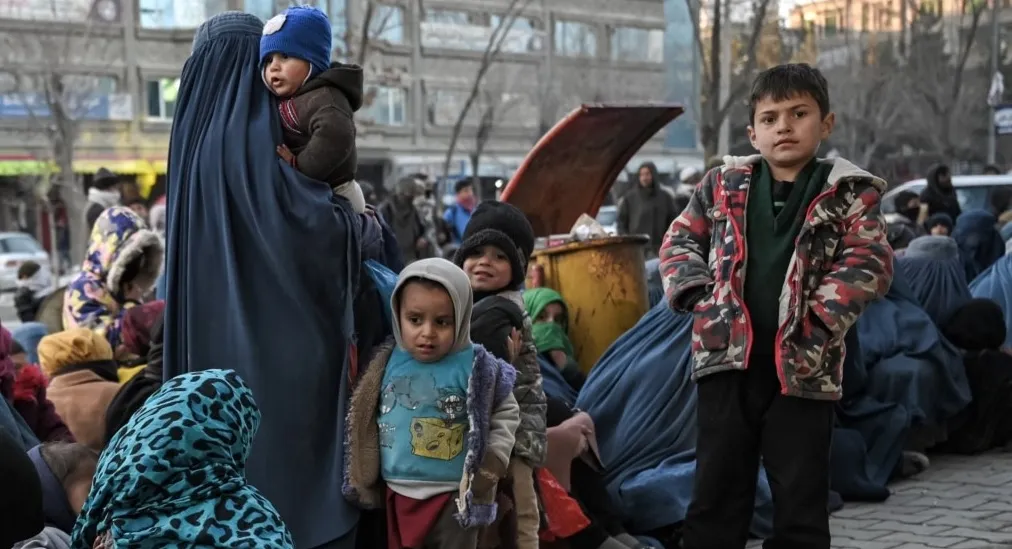
One of the most prominent social justice challenges under the Taliban is the exclusion of women from the labor market and economic roles. According to UN Women (2025), women and girls’ participation in political, educational, and economic spheres has reached one of the lowest levels globally, making Afghanistan home to one of the worst gender gaps. Measures such as banning secondary education for girls and restricting formal employment have pushed women into low-paying, informal, and often unsafe jobs, offering no guarantee for human development or economic justice.
This structural exclusion of women from economic roles clearly exemplifies economic injustice driven by political and institutional injustice: when political systems and institutions exclude large groups from decision-making and the labor market, societies not only lose human capital but also deepen regional, gender, and class gaps.
Public Goods Provision and Regional Inequality
Social justice in the economy is not just about income; it also concerns equal access to public goods such as education, healthcare, water, electricity, and social services. During the republic, despite international aid, these services were concentrated in central areas, and rural and ethnic minority regions received less. Under the Taliban, due to resource shortages, reduced aid, and concentrated power, these inequalities have worsened. Comparative studies show that in societies with concentrated political power and weak institutions, the provision of public goods is uneven: areas distant from power structures receive fewer services, and this imbalance exacerbates inequality.